I have been fasting monthly for 72 hours since the Winter Solstice.
As my meditation practice deepens, I am beginning to receive clearer messages—guidance, invitations—encouraging me to be more present in my days.
These messages have led me to soften my engagement with the world:
to stop watching television, to step away from the news, to fast, to be in nature more.
Some shifts came easily.
They felt like the natural continuation of a path I had already been walking.
It had already become harder to keep up with certain shows—overwhelmed not only by the abundance of choice, but by the violence, deception, and exaggerated expressions of life. At first, I wondered, is this just turning 40?
But truthfully, for years—since my teens, through my 20s and 30s—I have prayed for discipline, for focus, for a quieter way of being.
I have always longed for a kind of monastic life—serene, joyous, and free.
I do not live that life in form.
And yet, most days, I feel it in essence.
Recently, however, something else has been arising—edginess, subtle friction.
A stirring
For the past 3–5 years, in different iterations, my practice has been to meet my feelings without judgment—to stay present with them.
It is wild how the body learns.
How a muscle forms.
And how, when we do not realize how strong it has become, the default can still arrive with intensity.
In other words, judgment has been an easy language for me.
A fluent one.
Judging others. Judging myself.
Even holding fond memories of bonding with my mother through shared judgments—of people on the street, of characters on a screen.
And yet, despite that conditioning, I am now more present to choose grace.
To choose another thought.
It is not easy.
And it is becoming less hard.
—
This brings me to my most recent fast.
I had marked the calendar, but realized I had too much food in my fridge to let it spoil—so I postponed.
Then, with upcoming travel, I chose to fast during the workweek.
I knew this would be different.
Not because of hunger—but because of the demand for clarity, focus.
And during this fast, I chose to lean in.
While working, so much arose.
I felt—deeply—how quickly I want to turn to food as a soothing mechanism when even the slightest discomfort appears.
By the end of the second day, something shifted.
When I say I was struggling, it wasn’t just hunger—it was the pressure of choice.
Eat now, or wait.
I could not stop thinking about it.
And that, in itself, told me something.
Usually, I can observe thoughts of food without urgency.
But this time, every cell was whispering: break the fast.
So I sat with myself.
Why?
What is the truth here?
What is the gift of continuing?
What is the gift of stopping?
Can I offer myself grace either way?
Will I collapse into binary thinking—into shame, into failure?
No.
I slowed down
I listened more closely.
And I chose to break the fast.
Less from impulse—but out of relationship with my body.
It said: it is okay.
I was not fasting to prove anything.
Definitely not to sacrifice.
Nor to earn worth.
I was fasting to learn.
To meet myself more honestly.
To experience what remains when food—its rhythms, its comforts, its distractions—is removed.
To sit with what is raw, unbuffered.
And yes, the body enters states of regeneration.
It begins to cleanse, to repair, to restore.
But what I encountered most was TRUTH
A truth I had known before—but this time, I felt it.
From that feeling, something softened.
Perfection loosened its grip.
Grace entered.
What greater act of love than to say:
You are doing well. You are allowed to be human.
And let us not be mistaken, this was not a reward of food.
It was a reward of permission.
Permission for nuance.
For flexibility.
For pause.
For reflection.
For acceptance.
A counter to an old impulse:
Tough it out.
push through.
complete at all costs.
There is a place for that. To keep going when you want to quit…
…this was not that place.
—
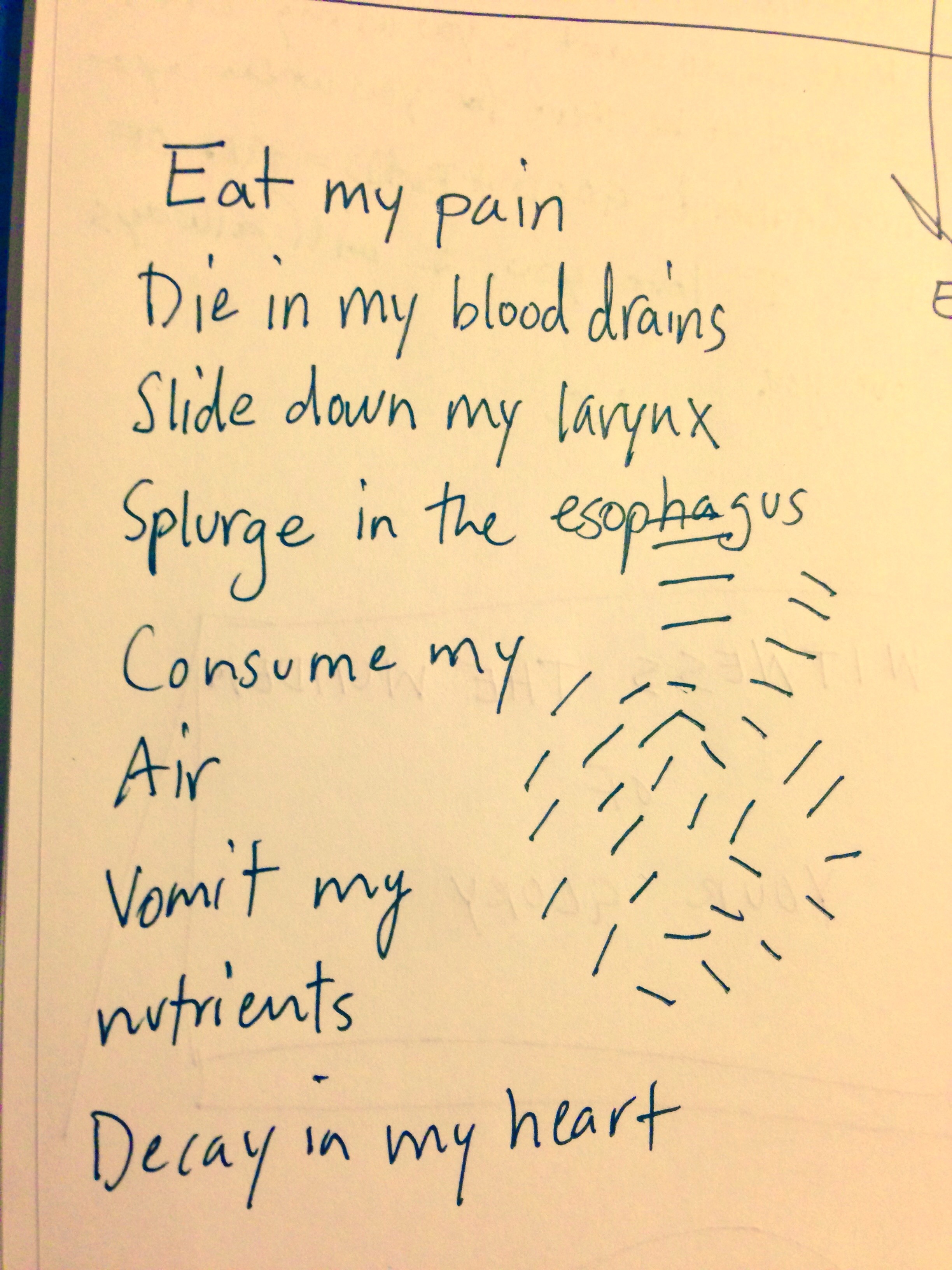
Then came the second practice: witnessing.
I ate slowly.
Presently.
Without distraction.
And I noticed—
The food did not resolve the feeling.
It did not soothe the way I imagined.
Strangely and divinely perfectly, that was the gift.
To feel the emptiness remain.
To see it clearly.
To know that emotions do not dissolve through consumption.
They ask to be met.
To sit with them is the work of the alchemist.
This is the work:
Know thyself.
—
And so I return to the question:
How can we practice grace if we believe ourselves to be perfect?
If nothing ever moves,
if nothing ever stirs,
what is there to meet?
We cannot be alchemists without elements in motion.
We cannot offer true compassion without having touched something similar within ourselves.
Love, in human form, can feel messy.
Unrefined.
Challenging.
And yet, when we center our divine nature, something paradoxical occurs—
Grace becomes natural.
Forgiveness becomes effortless.
Not the kind of forgiveness that erases harm,
or asks us to abandon ourselves—
But a deeper reconciliation.
A remembering of wholeness.
If I cannot offer grace to myself,
I cannot offer it to another.
And if I extend it outward,
It returns inward.
It is always reciprocal.
There is only One. This is sacred reciprocity!
So every act of grace or judgment touches the whole.
—
So I leave you here:
How can you practice grace in perfection? Is it possible?
Can there be alchemy without movement?
To master the self is not to become perfect—
but to meet what arises with truth, balance, and presence.
To witness the mind that shapes the world.
To know thyself
is to know the Other.
And in that knowing—
to remember the One.
Alchemy is not turning metal into gold.
It is turning density into light.
Lightening.
Softening.
Loving.
Smiling.
Letting go.
Leading with the heart
until even your steps begin to lift from the ground.
 indieHealer
Leave a comment